
Why don't you commit suicide?
How to come alive

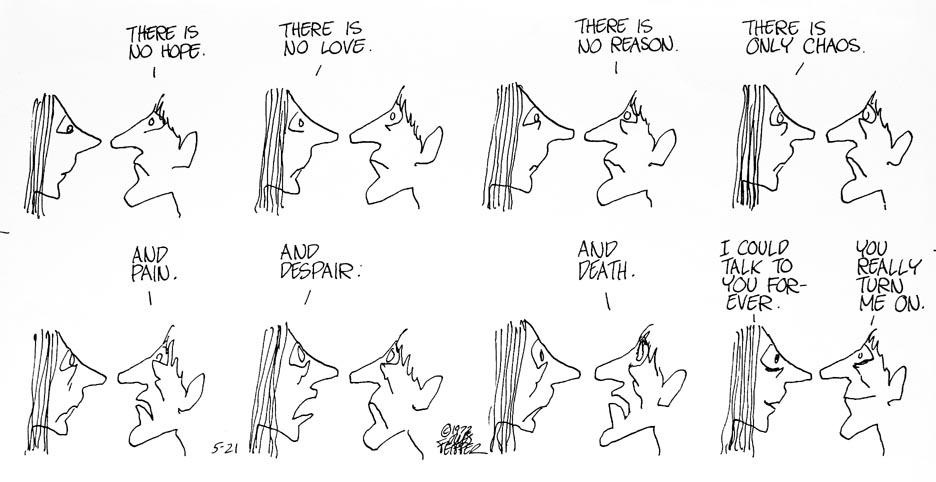
One of the very first questions Viktor Frankl would ask his patients in therapy was, “Why don’t you commit suicide?”
It’s a heavy question, but one that would help them identify reasons for living.
You might answer, “Because my mother would be devastated,” “Because my child needs me,” “Because I still have things I want to accomplish.”
Those are all powerful reasons. But notice what they have in common: they all depend on things outside you. They’re also all vulnerable to loss.
Your mother could die tomorrow. Your child could die tomorrow. You could lose the ability to do what you hoped to do. Or you could accomplish everything and still feel unfulfilled.
Then what?
Would you no longer have a reason to live?
Having reasons matters, but the great goal of life is to seek after an elevated state of being, a way of relating to life.
Life is limited in satisfaction
Another way to put the problem is this: no set of circumstances can completely satisfy us.
Whether you marry the perfect spouse, land the dream job, or find that best friend, all human pursuits are limited in the satisfaction that they can provide.
Spend enough time with your lover, brother, mother, favorite book or passion project and you’ll reach a point of boredom.
Samuel Johnson’s Rasselas is one of the great meditations on this problem.
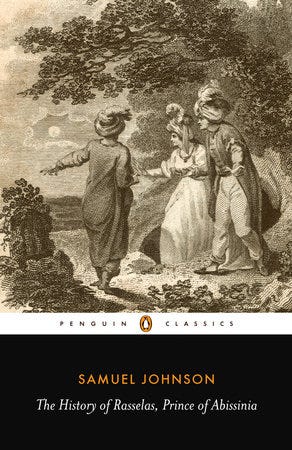
The book tells of a prince who leaves his kingdom in search of the best way to live — the way of life that leads to true happiness.
The prince visits a scholar, a businessman, a king, a monk, a family man — and finds that each life satisfies one part of us while frustrating another. The scholar desires the influence of the king. The king desires the knowledge of the scholar. The businessman desires the solitude of the monk. The monk desires the love of a family, and so on.
The prince ends his journey with the realization that all of our life choices — our choice of work, who we marry, where we live — may provide greater or lesser satisfaction, but never ultimate consolation.
Johnson’s answer at the close of Rasselas is an anti-answer: there is no perfect “choice of life.” Happiness comes less from the right arrangement of circumstances than from the right arrangement of yourself.
How to come alive
Our aim, then, isn’t to engineer the perfect circumstances, but to become the kind of person who can come alive, again and again, within imperfect ones.
But can aliveness actually be cultivated? Is it really possible to raise one’s motivation, by oneself, and to keep it raised — to be in high spirits, not just for a weekend, but as a settled condition?
Yes, in at least four ways. Let me touch on one — creative expression.
There are two fundamentally different ways to relate to your life.
In the first, life is happening to you. You go to dinner. You finish the project. You attend the party. You watch the movie. You scroll. You travel. You buy things. You keep yourself busy.
Something is always happening, and because something is always happening, you’re rarely bored. This can feel like happiness. In fact, many people call it happiness. “I have a full life.” “I’m always doing something.” “I’m never bored.”
But this isn’t anything close to genuine happiness. This is a life more or less of boredom-management. Of catching scraps of aliveness when possible. Not of bliss or joy or significance.
Such a person is completely asleep to the seriousness of life, and to the miracle of themselves. What many people seek is contentment, not fulfillment. They may think they’re aiming at fulfillment, but they’re not.
In the second way of living, you’re not merely participating in experience; you’re actively authoring it. You bring your full attention and creativity into the day — building, shaping, learning, loving — until the day becomes an expression of your powers.
Imagine two teachers assigned to teach the same class.
The first is given a perfect set of lesson plans. Every explanation, question and class activity has been prepared for him. Each session, he opens the plan to the proper page and follows it to the letter. If the students are stuck, the plan tells him how to move forward. If discussion stalls, it supplies him with more questions. His students learn the subject, perform well on their exams and leave the course satisfied.
The second teacher has no such lesson plan. She must decide how to explain each idea. When the class looks puzzled, she invents new examples. When a lesson fails, she studies what went wrong and tries again. She notices what excites her students and adjusts the course accordingly. Over time, she develops her own methods and becomes a better teacher. Her students also learn the subject, perform well on their exams and leave the course satisfied.
Now which of the two teachers is more fulfilled?
Without question, the second teacher. Why? Because her work required something vital from her. Because her personality, intelligence and creativity entered deeply into her work. The second teacher wasn’t just teaching a course, she was creating one — and, in the process, creating herself. The first teacher more closely resembles an assembly-line worker than a creator.
Two people may produce the same outward result while inwardly experiencing completely different lives.
Every action produces two results: one in the world and another in the person who performs it.
We pathologically fixate on the first: whether our actions produce successful or unsuccessful results. But fulfillment depends at least as much on whether our actions called our powers into play and, through their use, enlarged and deepened us.
When your work draws nothing from your interests, creativity, personality or intelligence, we have a name for that: alienation. You’re a stranger to your own activity, and so, in the end, to yourself.
Our lives grow gray with familiarity
Many people grow tired of their lives — even lives they desperately wanted — because they become proficient at their own existence, at their roles and routines, and that proficiency turns their lives gray.
There’s something unavoidable in this. We couldn’t live if every act demanded our full attention. We rely on habit to tie our shoes, drive us to work, cook our meals and perform a thousand tasks without exhausting us. Habit is an indispensable servant. The trouble is that habit has no stopping point and routinizes everything.
Familiarity begins to drain the color from life. Even things that once made you feel alive can become background furniture. What began as a deeply meaningful activity — teaching, painting, meditation, a marriage — gets converted, slowly, into proficient passivity. The teacher goes on teaching, the lover continues saying loving things, the writer continues writing his weekly column. The outward form persists, but there’s now a passive operator inside.
“As the years go by,” John W. Gardner writes, “we view our familiar surroundings with less and less freshness of perception. We no longer look with a wakeful, perceiving eye at the faces of the people we see every day.”
This, he says, is why people love to travel. Not because distant places are objectively any more interesting than where we live — there’s a traveler in your city right now having the time of his life — but because travel “shakes us out of our apathy,” and for a week or two we’re allowed to see again. Our curiosity and conscious attention has momentarily returned.
But we don’t need to travel to recover that wakefulness.
Gardner goes on to explain that “Thoreau lived as constricted a life as one could imagine, and yet found within himself and his immediate environment sources of renewal that have nourished generations.”
There is enough depth in any ordinary life — enough strangeness in the people you know, enough complexity in the world you live in — to make endless new demands on the spirit, provided you meet your experience with an active and creative mind.
Meaning comes less from how much you experience than from how much of yourself you bring into experience. Meaning isn’t a property that anything permanently has, it’s a relationship we keep alive.
This is what I meant when I said that all human pursuits are limited. Nothing stays new on its own. Everything quietly goes gray if you don’t continually meet it with fresh attention, effort and discovery.
I had written a closing section for this reflection, but then I remembered the passage below, and how it puts mine to shame. So I’ve retired my version to let Gardner have the final word. Please enjoy:
“We want to believe that there is a point at which we can feel that we have arrived. We want a scoring system that tells us when we’ve piled up enough points to count ourselves successful. So you scramble and sweat and climb to reach what you thought was the goal. When you get to the top you stand up and look around and chances are you feel a little empty. Maybe more than a little empty. You wonder whether you climbed the wrong mountain. But life isn’t a mountain that has a summit, nor is it — as some suppose — a riddle that has an answer. Nor a game that has a final score. Life is an endless unfolding, and if we wish it to be, an endless process of self-discovery, an endless and unpredictable dialogue between our own potentialities and the life situations in which we find ourselves. By potentialities I mean not just intellectual gifts but the full range of one’s capacities for learning, sensing, wondering, understanding, loving and aspiring. Perhaps you imagine that by age 35 or 45 you have explored those potentialities pretty fully. Don’t kid yourself! The thing you have to understand is that the capacities you actually develop to the full come out as the result of an interplay between you and life’s challenges — and the challenges keep changing. Life pulls things out of you. There’s something I know about you that you may or may not know about yourself. You have within you more resources of energy than have ever been tapped, more talent than has ever been exploited, more strength than has ever been tested, more to give than you have ever given.”
If this resonates with you, you’ll find my mentorship worthwhile.
I strongly believe that every piece of art, still or performing, comes into your life at the right time, when you need to experience it the most. This post felt like that. Lovely read.
Very “Myth of Sisyphus” of you Mr Camus!