
You become extraordinary by being ordinary everywhere else
You must forget the world in order to become useful to it

Last year an acquaintance asked me, “What did you do this weekend?”
I said I did some studying and saw my dad.
She paused, waiting for more.
“Oh… Well, do you have any fun plans coming up? We’re taking a trip to Palm Springs. Do you ever travel?” she said.
There was a faint note of pity in her voice. Apparently my weekend had failed to qualify as a weekend. I always find this sort of thing amusing: how we’re disappointed in lives that don’t generate the right kind of updates.
The reality is that the deepest activities of life are highly resistant to narration. The richer an activity becomes, the more difficult it is to describe.
Love, mastery, contemplation, friendship, scholarship, spiritual practice — all involve returning to the same people, places and practices thousands of times. A life can be extraordinarily full and appear remarkably uneventful.
“Went to Palm Springs” is an event.
“Spent four hours trying to understand Plato” isn’t much of an event.
Imagine asking Miles Davis, “So besides playing the trumpet, what else do you do?”
You immediately feel the absurdity of the question.
From the outside, playing a single instrument for a lifetime looks like monotony. But from within that one thing, there is profound and dazzling variety.
Variety should enrich a life already organized around something meaningful. It shouldn’t be used to distract us from the fact that our life is organized around nothing. Variety should be the overflow of a deep life, not a substitute for one.
You’ll never build a great life trying to be attractive and interesting in every direction. Much has to be neglected. You become extraordinary somewhere by being ordinary almost everywhere else.
Exceptional people are often comically uneven. Freddie Mercury reportedly couldn’t boil an egg. Agatha Christie was an atrocious speller. Lillian Gilbreth helped design the modern kitchen but reportedly couldn’t cook herself.
No one remembers them for their glaring shortcomings. We remember them for the very small territory where they were legendary.
Watson was shocked to discover that Sherlock Holmes didn’t know the Earth revolves around the sun. Holmes was unbothered: “What the deuce is it to me?”
A person’s mind, Holmes explained, is a small attic. The fool stuffs it with every piece of lumber he comes across; the skilled workman stocks only the tools of his trade.
Now that he knew the fact, Holmes added, he would do his best to forget it.
You must be narrowly and fiercely concerned with your purpose, your excitement, your loved ones, your health — and ruthlessly ignorant of almost everything else.
Which brings me to my point: You must forget the world in order to become useful to it. To find the part of it that is yours to serve.
Let me share three thoughts on the importance of guarding your ignorance — one about the culture, and two about personal development.
Moral masturbation
We live in a time when knowing about things has become a substitute for doing things.
Our culture has made “being informed” a kind of moral achievement. If everyone is talking about something, your silence is taken as negligence. Not knowing about a war, a scandal, or an injustice is taken to mean that you don’t care about it.
Does caring even count if you don’t do it loudly?
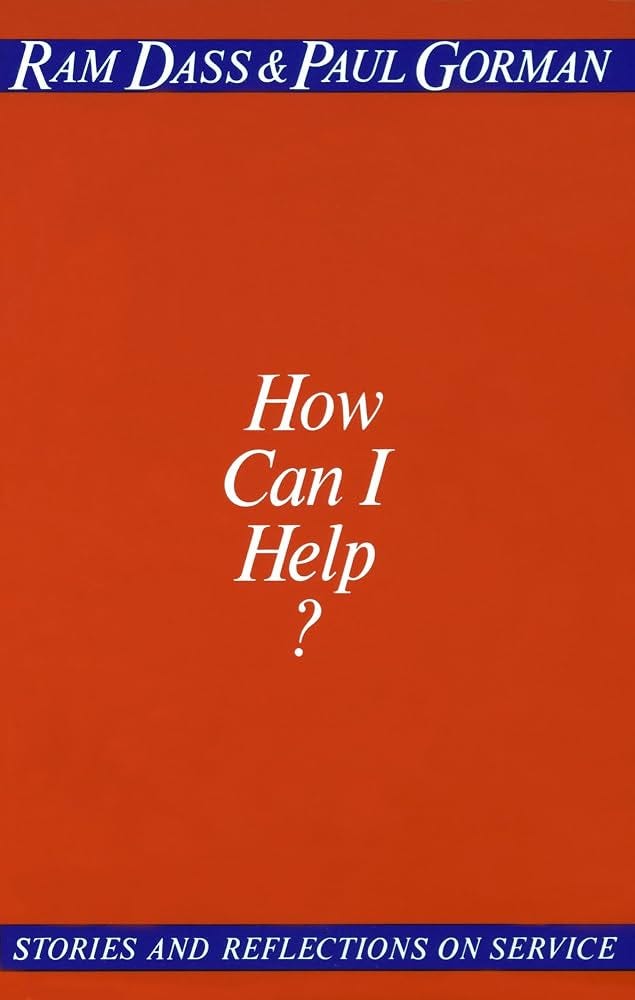
The reality is that most people aren’t serious at all about goodness. “It’s easy to do good, it’s hard to do good well,” said Ram Dass.
We’ll give five dollars to the homeless man, but we wouldn’t dare let him live with us, which would give him the stability needed to actually change his life.
Modern media gives us all the drama of a moral crusade without any of the responsibility.
A laugh track in a sitcom laughs for us. A sad song grieves for us. And pundits and podcasts perform our conscience for us.
We tune in to be morally aroused. When our favorite pundit condemns an injustice, we receive the catharsis of action without having done anything.
We should call it what it is: moral masturbation.
It’s easier to care about all of humanity than to become answerable to one human being.
Moral seriousness begins when we restore the link between concern and action.
I remain as ignorant as possible of the world’s goings-on, so that I can be powerfully attentive to the few pursuits where I can actually make a difference.
Epictetus would tell his students: “If you want to improve, be content to be thought foolish and stupid with regard to external things.”
The next time someone asks whether you’ve heard the latest news and you say no, feel no embarrassment — feel pride. Being up to date on everything is the consolation prize for being immersed in nothing.
We mind other people’s business when ours isn’t worth minding.
The avoid-at-all-costs list
There’s a story told about Warren Buffett and his personal pilot, Mike Flint. The story appears to be apocryphal, but its message is far more important than its veracity.
Buffett asked Flint to write down his twenty-five most important career goals, then circle the five that mattered most.
Flint created his list and circled the top five.
“And what about the ones you didn’t circle?” Buffett asked.
Flint said that he would pursue them intermittently when he had time, but the top five would receive most of his attention.
No, Buffett told him. Everything you didn’t circle just became your avoid-at-all-costs list.
Those twenty should receive absolutely no attention until the top five were achieved.
This exercise is so illuminating because we assume our focus is ruined only by bad uses of time, when in reality it’s often ruined by good uses of time — by decent opportunities, worthy projects, and all the other things we can easily rationalize.
You must go for broke — pursue only the greatest goals you can conceive of.
Make your life about one thing
The principle “make your life about one thing” should be operative at every level of your life.
At the macro level, have one immense purpose or ideal that you serve: to transform education, to become a wise person, to become a saintly person.
At the micro level, give yourself to one high-leverage project at a time.
I’m not saying you should cut down your many interests and hobbies. I’m saying you must have sacred priorities.
Human beings rarely make meaningful progress on more than one thing at a time.
My greatest work has come from sustained, almost religious concentration on one thing over time. My best work has never come from balancing everything well. It has come from giving one thing my entire mind for two, three, four hours a day, for weeks or sometimes months at a time.
You must marinate in something long enough to extract its sacred essence.
Give your best energy and attention to one — and only one — project at a time, and let your lesser self handle the rest of the day. Wisdom is knowing when to be mediocre.
This was hard for me to accept, because I didn’t want to be mediocre some of the time. But this is a limitation you have to happily accept. You won’t be brilliant everywhere, and if you try to be brilliant everywhere, you’ll be brilliant nowhere.
So if you’ve been brilliant for part of the day, that’s enough. Rejoice. You’ve done your religious duty. You gave the highest part of yourself to the thing that mattered most. Now you can be mediocre for the rest of the day without guilt.
I know I’ve succeeded when I look at one of my projects and think, “I don’t even know who created that.” Because that Omar was possessed. That Omar was operating at the height of his powers.
And that is the most that any of us can hope for.
You only enter that possessed state when you’re completely absorbed in one thing — not just for a morning, but for ten, twenty or sixty mornings in a row.
Give your fully concentrated self to one thing at a time, and live in that space until it’s finished.
If you’re trying to find the part of the world that is yours to serve — but haven’t quite found it yet — come join my seminar. I’d love to meet you and work with you.
The line about it is easier to care about all of humanity than to become answerable to one human being is so profound and so true!
You talk with so many informed people but then you realize much of it is performative as when it comes to the world they know it all, but then their personal lives are a mess!
A really great read and I agree with focusing on one thing and going from there!
Thoroughly enjoying your work, I've found these sentiments to be thoroughly useful in my own wrestle with collective efforts and failure to meet commitments on climate change